Carriers return to Suez in October 2026: what it means for Colombo cargo and transit times
Gemini, COSCO, MSC and now the Premier Alliance are moving Asia-Europe services back through Suez, while schedule reliability fell to 49.9% in August. Escorts in the Red Sea remain stretched.
· 3 min read · Forwarder.lk
What is happening
More container lines are moving Asia-Europe services back to the Suez Canal and Red Sea after years of routing around the Cape of Good Hope. This is an update to our earlier post on Hormuz and Red Sea disruption.
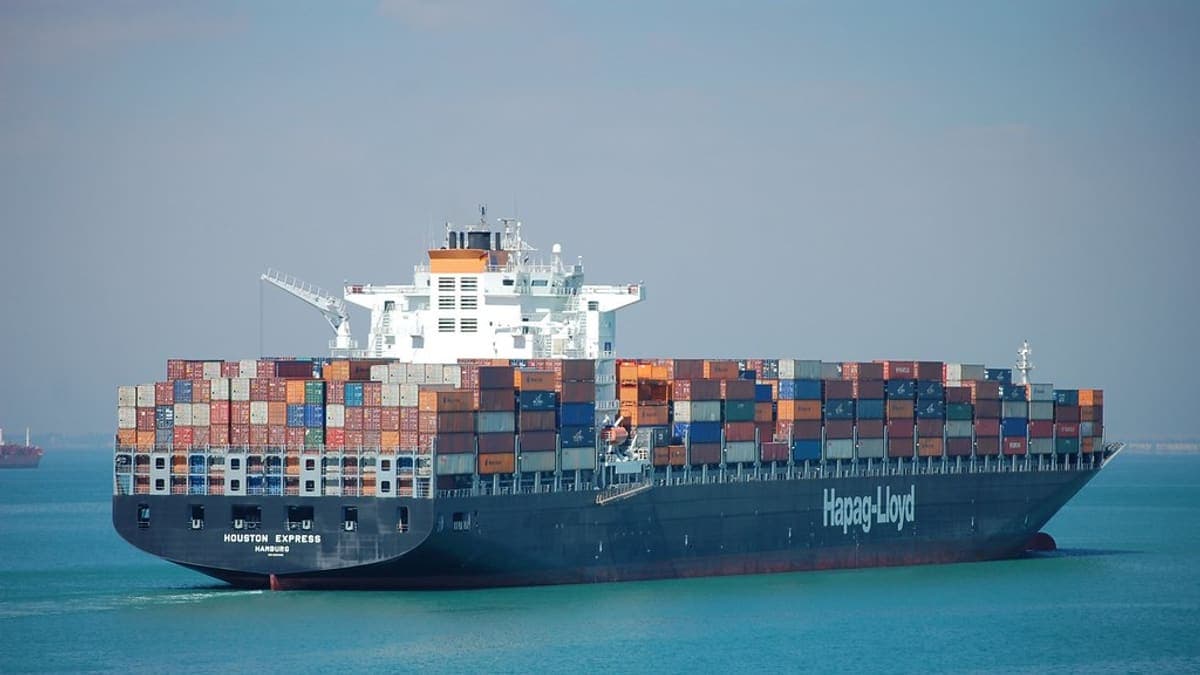
Gemini (Maersk and Hapag-Lloyd). On 14 September the two carriers said four more Gemini services would move from the Cape to the Suez route, joining AE15 and AE19, which already used the canal. Container News listed the Hapag-Lloyd names as NE4, SE1, SE2 and IEX. The first westbound IEX sailing, Cornelia Maersk voyage 638W, had Colombo as its last call before Suez. The carriers said they will keep monitoring security and "may introduce further changes if conditions develop."
COSCO and the Ocean Alliance. According to Linerlytica, cited by The Loadstar and republished by gCaptain on 1 October, COSCO's 24,200 teu OOCL Spain was due to make the group's first westbound Suez transit in more than two years on 4 October, on the AEU1/LL1 service, which CMA CGM sells as FAL5. ChemAnalyst reported that the 24,188 teu OOCL Portugal transited southbound on 16 September.
MSC. Container News reported that westbound cargo on MSC's Indusa service is returning through the Red Sea, starting with MSC Domna X, which left Colombo on 23 September, while eastbound cargo still goes around the Cape. MSC said the change will be handled case by case.
Premier Alliance. ONE, HMM and Yang Ming plan to move their FE1 Southeast Asia-North Europe service to Suez. The 8,100 teu One Continuity is due to reach Suez on 9 November and Rotterdam on 19 November. The Loadstar said revised schedules suggest nearly all major carriers will tentatively resume Suez transits on Asia-Europe in October.
Scale. Linerlytica counted 30 ships of over 4,000 teu through Suez in one week, the busiest week since 2024, and about 140 boxships, just over 2 million teu, switching from the Cape since May. SAFETY4SEA, citing Windward, reported monthly containership transits rose from 139 in March to 221 in September.
Security. The return rests on fragile ground. The Loadstar linked renewed confidence to a reported Houthi letter to the EU, sent on 10 September according to the Financial Times, promising not to attack European cargo ships. But SAFETY4SEA reported on 29 September that EU foreign policy chief Kaja Kallas said "there are commercial ships that are waiting in the queue to receive the escort", because the EU's Aspides mission does not have enough frigates. SAFETY4SEA also noted that a serious incident at Bab el-Mandeb could prompt carriers to reroute to the Cape again.
Schedule reliability. Sea-Intelligence reported on 30 September that global schedule reliability fell 5.9 points to 49.9% in August, the lowest since September 2022. Late vessels arrived an average of 6.81 days late. Gemini was the most reliable alliance at 77.8% for July and August, while Premier Alliance was lowest at 43.2%. The decline was attributed to severe port congestion in Asia.
Why it matters
- Shorter voyages for Europe-bound cargo. ChemAnalyst said Suez routing cuts 14 to 21 days off Asia-Europe voyages compared with the Cape. Services like ME2/IEX and MSC's Indusa call Colombo just before the canal, so Sri Lankan exporters on those loops could see faster transits to Europe.
- Changing transshipment patterns. Container News noted that the return brings shifted port rotations and changed transshipment arrangements, and that delivery timing can shift even when the sea passage is shorter. Expect schedules and cut-off dates to change.
- Not one route, but two. Many services use Suez in one direction only. Your export and import legs may follow different routes.
- Reliability is still poor. Below 50% on time globally, buffer time remains essential.
- The return can reverse. Any attack could send ships back around Africa at short notice.
What you can do
- Ask which routing your booking uses, in both directions, and the quoted transit time.
- Recheck cut-offs and free time when services change rotation.
- Keep a buffer for delivery dates while reliability stays near 50%.
- Check war risk and surcharge terms, since some carriers have added Suez-related charges. See our post on war risk insurance.
- Follow carrier advisories, as routings are conditional on security.
Sources
- Hapag-Lloyd and Maersk return four Gemini services to Red Sea route, Container News, 14 September 2026
- Premier Alliance prepares for Asia-N Europe services return to Suez, gCaptain (The Loadstar), 1 October 2026
- The Suez route is returning. The voyage is not yet normal., Container News, 22 September 2026
- Suez return gains momentum as Asia-Europe capacity pressures mount, SAFETY4SEA, 1 October 2026
- EU seeks more warships as Houthi threats disrupt Red Sea shipping, SAFETY4SEA, 29 September 2026
- Sea-Intelligence: Global schedule reliability continues to plummet in August, Container News, 30 September 2026
- Red Sea routing hits 27% normalization as Gemini adds four more services back to Suez, ChemAnalyst, 18 September 2026
General information, based on the sources above as of 7 October 2026. It is not legal, customs or financial advice: check the official source before you act.
Is this affecting your shipments?
Share your experience or ask others in the community. No account needed.