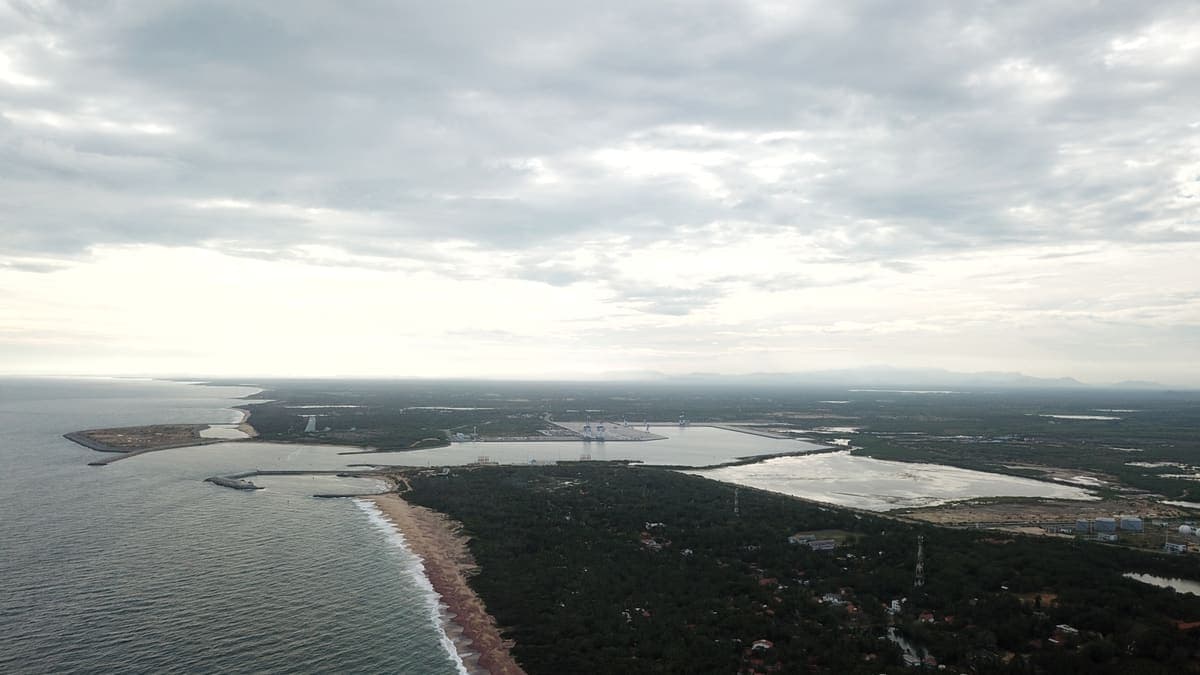
Sea-Intelligence: Hambantota among ports gaining liner connectivity as lines reroute around Middle East
Sea-Intelligence data released on 8 October shows ports on the edges of the Middle East conflicts, including Duqm, Khor Fakkan and Hambantota, gained liner connectivity in Q3 2026.
· 3 min read · Forwarder.lk
Shipping lines have redrawn their networks around the conflicts in the Middle East, and some ports on the edges of those regions are now better connected than before. Hambantota is one of the ports named.
What is happening
On 8 October 2026, shipping analysts Sea-Intelligence published new figures based on UNCTAD's Port Liner Shipping Connectivity Index. The index measures how well a port is linked to the global liner network. Sea-Intelligence compared each port's connectivity in July to September 2026 with a pre-crisis baseline: July to September 2023 for the Red Sea crisis, and October to December 2025 for the closure of the Strait of Hormuz.
According to the Sea-Intelligence press release:
- Ports inside the affected regions lost liner connectivity, while ports in the adjoining regions "picked up that slack".
- Ports along the Gulf of Oman recorded the largest gains because of the Hormuz closure. Duqm in Oman was up 213% and Khor Fakkan in the UAE up 188% against the baseline.
- Because of the long transit time to the Central and Eastern Mediterranean through the Strait of Gibraltar, lines pushed African relay operations south along the Atlantic coast, lifting connectivity at West African ports.
- Walvis Bay in Namibia became an alternative to congested Durban for Asia to Europe ships sailing around Africa.
- East Africa and Indian Subcontinent ports acted as a hub for displaced regional cargo, for lines that wanted to avoid the conflict region altogether. This drove connectivity gains for Dar es Salaam and Hambantota.
"The geopolitical disruptions in the Middle East have forced shipping lines into substantial network redesign," Sea-Intelligence CEO Alan Murphy said.
The press release does not give a percentage figure for Hambantota, and it does not mention Colombo.
gCaptain carried the findings on 8 October in a column by Lori-Ann LaRocco. She wrote that sub-hub ports are "critical for container lines, as they decide where to transfer cargo next", and that China Merchants Port, MSC, Maersk's APM Terminals, DP World and others had invested in alternative gateways in the region before the disruptions began. She also noted continuing attacks on ships in the Strait of Hormuz, including one that morning on a Qatari LNG tanker, as reported by UKMTO. Container News published an explainer on the same data on 9 October.
Why it matters
For Sri Lankan shippers, the data supports what local port figures have been showing. The Daily FT reported on 6 October, citing Central Bank data, that Colombo port container volumes rose 10.3% year on year to 5.99 million TEUs in the first eight months of 2026, driven by transshipment. It also reported that domestic container traffic contracted sharply in August, and that re-stowing grew 22.4% to 273,588 TEUs over the eight months.
Better connectivity at a port usually means more services calling there and more transshipment options. That can help exporters find space and routings. But Sri Lankan ports have also carried diverted cargo at the cost of yard pressure and berthing delays, as we covered in our post on Colombo port congestion.
The Sea-Intelligence figures describe a network built around the current conflicts. gCaptain also reported that container carriers are accelerating their return to the Suez Canal (see our post on carriers returning to Suez). If routes return to normal, the connectivity gains at edge ports may not all last. Sea-Intelligence did not make a forecast on this.
For more on Hambantota's recent growth and expansion plans, see our post on Hambantota passing one million TEUs.
What you can do
- Ask your forwarder or carrier which services now call at Hambantota and Colombo for your trade lane, and whether your cargo is being relayed through a different hub than before.
- Check where your containers are transshipped. A change of hub can change transit times, documents and local charges.
- Keep an eye on network changes as carriers move back to Suez, since services added during the crisis may be withdrawn or rerouted.
- Read the original Sea-Intelligence press release for the full list of ports and baselines before relying on the figures.
Sources
- Connectivity: Shocks vs. Policy Shifts, Sea-Intelligence, 8 October 2026
- Subcontinent Ports Benefiting from Geopolitical Disruptions, gCaptain, 8 October 2026
- Explainer: Where the connectivity went, Container News, 9 October 2026
- Colombo port container volumes up 10% in eight months on transshipment growth, Daily FT, 6 October 2026
General information, based on the sources above as of 10 October 2026. It is not legal, customs or financial advice: check the official source before you act.
Is this affecting your shipments?
Share your experience or ask others in the community. No account needed.