Carbon surcharges for Q4 2026: Maersk charges US$176 per FEU from South Asia to North Europe
With EU ETS at full coverage in 2026, Maersk and ONE reset emissions surcharges from 1 October, while IMO talks on a global carbon price stalled in September and move to December.
· 4 min read · Forwarder.lk
What is happening
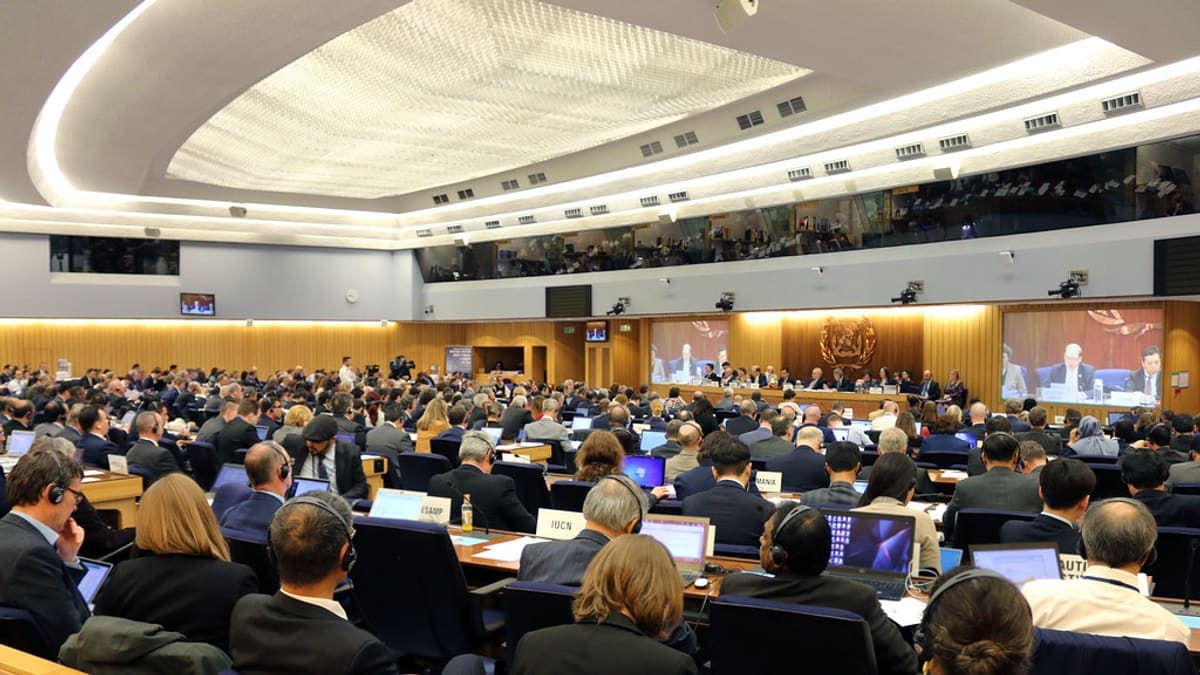
Shipping lines updated their carbon surcharges for the last quarter of 2026 on 1 October. These charges pass on the cost of two EU rules: the EU Emissions Trading System (EU ETS) for shipping and FuelEU Maritime. At the same time, talks on a global carbon price at the International Maritime Organization (IMO) have stalled again.
EU ETS: the full bill from 2026
2026 is the year the EU ETS reaches full coverage for shipping. ENGINE, in a report published by Hellenic Shipping News in January, explained the rules:
- Voyages between two EU ports pay for 100% of emissions, up from 70% in 2025.
- Voyages between an EU and a non-EU port, such as Colombo to Rotterdam, pay for 50%, up from 35%.
- Methane and nitrous oxide are now counted as well as CO2.
The same report said CMA CGM, Maersk, Hapag-Lloyd, ONE, MSC and Swire Shipping all apply EU ETS-linked surcharges, and that Hapag-Lloyd and Maersk say FuelEU compliance costs also add to the charge. Maersk said "FuelEU compliance costs are increasing due to biofuel price trends".
The Q4 2026 surcharges
Maersk published its Q4 Emissions Surcharge (EMS/ESS), valid 1 October to 31 December 2026. It is based on an average EU allowance price of EUR 78.97 per tonne, taken from 16 May to 15 August 2026, and it covers both EU ETS and FuelEU Maritime. Selected rates per 40ft dry container:
- Middle East/Indian Subcontinent to North Europe: US$176
- Middle East/Indian Subcontinent to Mediterranean: US$149
- North Europe to Middle East/Indian Subcontinent: US$227
- Far East Asia to North Europe: US$170
Maersk says the charge applies to all bookings where the loading or discharge port is in the EU or EEA. It decided not to pass on UK ETS costs for now because the impact is minimal.
ONE published its Europe Environment Surcharge (EES) for 1 October to 31 December 2026. For Asia/Oceania to Europe it is US$220 per 40ft dry and US$420 per 40ft reefer. Asia to Mediterranean is US$90 per 40ft dry. ONE says the charge now includes the UK ETS, which requires allowances for 100% of in-scope emissions from 1 July 2026, on top of EU ETS and FuelEU costs. ONE reviews the rates every quarter.
The IMO Net-Zero Framework: still not adopted
The IMO planned to adopt a global fuel standard with a carbon price, the Net-Zero Framework, in October 2025. That vote was adjourned for a year. A Blank Rome analysis published on 10 September 2026 by the National Law Review said the framework came through the April to May MEPC 84 meeting unchanged. It said the US asked the IMO in March to drop the framework entirely, and a group of oil-producing states called for a consensus approach without "punitive measures".
The latest working group met from 1 to 4 September with no deal. Shipping Telegraph reported on 8 September that Transport & Environment called it the third straight meeting without progress. UCL researchers said about two-thirds of the states that spoke backed a central system to collect and pay out carbon revenue. The next dates are:
- Working group: 23 to 27 November 2026
- MEPC 85: 30 November to 3 December 2026
- Extraordinary session to resume: 4 December 2026
Why it matters
For Sri Lankan exporters selling to Europe, these surcharges are a fixed cost on every box. A garment or tea shipper sending a 40ft container from Colombo to North Europe with Maersk pays US$176 in emissions surcharge alone this quarter. Reefer cargo, such as fresh produce or seafood, pays more with every carrier. Importers bringing goods from Europe pay too, and on Maersk the Europe to Indian Subcontinent charge is higher than the eastbound one.
The charges change every quarter and follow the EU carbon price, so quotes made today can be out of date by January. If the IMO adopts a global framework in December, a second carbon cost could be added for voyages that do not touch Europe, but its timing and design are still open.
What you can do
- Ask your forwarder to show the emissions surcharge as a separate line on every Europe quote, with the carrier and quarter.
- Compare all-in rates, not base freight. A carrier with a lower base rate may have a higher surcharge.
- Check if your carrier offers low-carbon fuel options or rebates, and whether European buyers will share the cost.
- Plan for a new figure from 1 January 2027 and build it into annual contracts.
- See our earlier guide to shipping line surcharges for the other charges on your bill.
Sources
- Emissions Surcharge (EMS/ESS), Maersk, 1 September 2026
- Europe Environment Surcharge (EES) Surcharge Effective from October 1st, 2026, Ocean Network Express (ONE), 1 September 2026
- Carriers to pass higher EU ETS costs on to customers, Hellenic Shipping News (ENGINE), 12 January 2026
- IMO Net-Zero Framework: MEPC 84 Advances Negotiations Amid Political Headwinds, National Law Review (Blank Rome), 10 September 2026
- IMO's Net-Zero Framework heads for December as states still divided, Shipping Telegraph, 8 September 2026
General information, based on the sources above as of 7 October 2026. It is not legal, customs or financial advice: check the official source before you act.
Is this affecting your shipments?
Share your experience or ask others in the community. No account needed.